


AI Fashion Photography: On-Model Shots Without Models
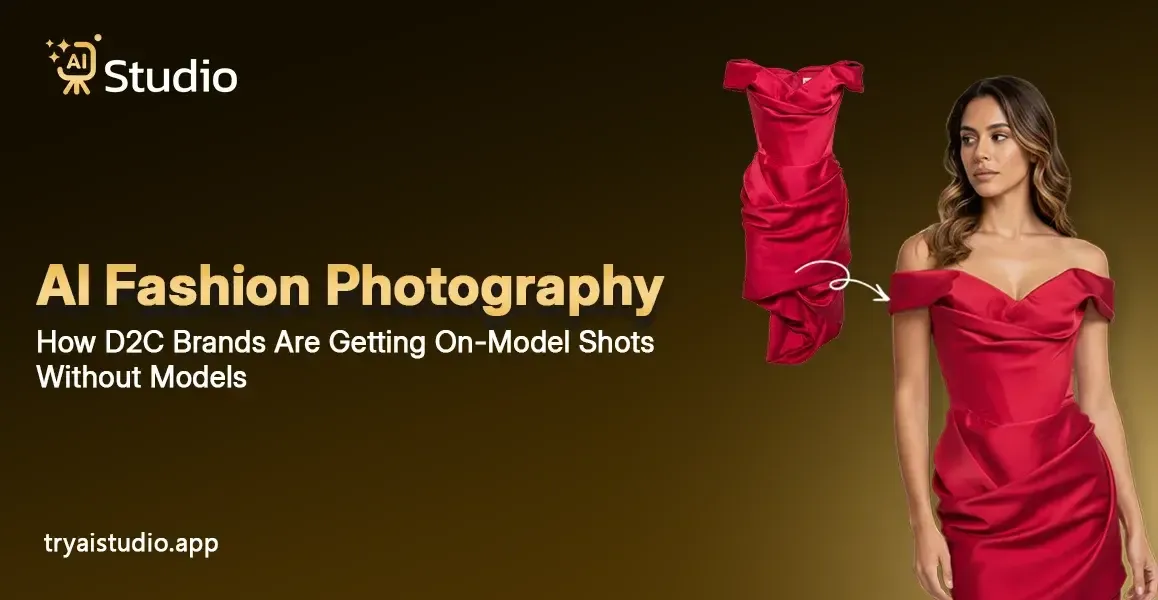
Your online clothing and accessory business operations face significant challenges because of the product photography process. The process requires you to hire models, book studios, pay photographers, and perform image editing, which creates high expenses for your business.
I have observed that sellers spend between ₹15,000 and ₹50,000 to conduct a good photoshoot, which fails to deliver reliable results. The amount represents a significant cost burden for a small business that needs to establish itself.
AI fashion photography technology enables brands to develop product images through virtual model representation. Indian sellers now utilize AI product photography systems to generate professional on-model photographs without needing to visit a studio.
This article presents a comprehensive explanation of how it all works, why it matters, and which technologies are making it possible.
What Is AI Fashion Photography and Why Should You Care
Let me explain this in a simple way. AI product photography uses artificial intelligence to create and modify product images without requiring real-world studio facilities, physical models, and high-cost photographic equipment. The AI software creates a professional product display through automatic background selection, which uses three different display options.
This development provides substantial advantages to Indian e-commerce vendors who sell their products through Amazon, Flipkart, and Shopify platforms. The new system eliminates the need to spend multiple days waiting for a photographer appointment while also enabling you to save money that you would have spent on a photo shoot. The output quality from contemporary AI product photography tools reaches a level that competes with professional studio results.
The tool enables you to produce ten product images within five minutes, while a standard photo shoot requires two days and costs more than ₹20,000. If you want to understand just how much AI product photography is changing everything, the results speak for themselves.
The Real Problems with Traditional Product Photography for Indian Sellers
I have collaborated with multiple small business owners and D2C brand creators, and traditional photography methods create real, recurring difficulties. Let me break down what most sellers face.
High Costs That Eat Into Your Margins
A basic product photoshoot in a decent studio in India can cost anywhere from ₹10,000 to ₹30,000. The total cost increases to between ₹40,000 and ₹80,000 when you add a model for a single session. This expense represents a major financial burden for a brand that is just starting out.
The worst aspect of this situation is that you need to create new images every season. Fashion moves fast. Annual photography expenses exceed ₹1,50,000 when you complete 3 to 4 shoots throughout the year.
Inconsistent Quality Across Listings
Your expenses for photography sessions do not guarantee consistent results because the lighting, shadows, and color tones will differ between each session. Your online store presents an unprofessional appearance because of this. Buyers notice this.
Brand identity establishes itself through product images that maintain visual consistency. The visual consistency of your Shopify store images and Amazon listing images creates a shopping experience that boosts customer confidence in your business.
Logistics Are a Nightmare
The entire process requires photographers to establish connections with models, reserve studio time, send products for shooting, and handle all changes to existing work. Small business owners who run their enterprises alone need to perform all of these operational tasks simultaneously.
This is where the benefits of AI product photography become most clear. The system operates without any need for logistical arrangements — no scheduling, no product shipping, no periods of inactivity.
How Does an AI Product Image Generator Actually Work
The process of achieving results requires less effort than people assume.
Most AI product image generators work in a few basic steps. You upload your product photo (just your item against any background), the AI then processes the image and either places it on a virtual model, removes the background and adds a studio-style backdrop, or generates a completely styled scene around your product.
The smarter platforms use deep learning models trained on thousands of product and fashion images. The reason why the output appears authentic lies in its use of advanced computer-generated technology.
Here's what a typical workflow looks like:
- Upload your raw product image
- Choose a background style, model type, or scene
- Let the AI generate the result (usually in under 10 seconds)
- Download and use directly for your listings or ads
AI Studio and similar tools provide advanced capabilities beyond what basic tools offer. The platform provides ecommerce sellers with a solution that generates AI fashion photos showing their products on models — without requiring actual models.
I have observed brands using AI Studio to produce uniform product photographs applied across their complete product collection without needing to visit any studios. The generated output meets all requirements for Amazon product listings, Flipkart product uploads, Shopify online stores, and social media advertising.
AI vs Traditional Product Photography: An Honest Comparison
We will present both options in a side-by-side comparison to help you choose which option better suits your needs.
Traditional studio photography provides complete artistic freedom and delivers the authentic presence of human models. That is absolutely true. But the expenses and time required become unmanageable for most small sellers who need to operate their business with speed.
Here's how the two compare on the things that matter most to Indian ecommerce sellers:
| Factor | Traditional Photography | AI Product Photography |
|---|---|---|
| Cost | ₹15,000 to ₹80,000 per session | Starting at ~₹600/month |
| Time | 1 to 3 days | 10 to 30 seconds per image |
| Consistency | Varies by shoot | Identical quality every time |
| Scalability | Difficult to scale 100 products/day | Bulk processing at no extra cost |
| Model availability | Requires booking, contracts, payment | Virtual models, no hiring needed |
For a more detailed breakdown, this guide on AI product photography vs traditional shoots covers every angle. For small businesses, D2C brands, and even marketing agencies handling multiple clients, the choice is fairly clear.
Best AI Tools for Product Photography in 2025
The market provides multiple options, but not all of them provide suitable solutions for Indian online merchants. Here is a truthful assessment of the current landscape.
AI Studio
The AI Studio platform stands as the most dedicated AI product photography tool for e-commerce sellers. The system serves fashion, jewelry, and accessories brands that require studio-quality product photos but lack the budget for professional photography services.
What makes it stand out:
- Generates on-model product photos without a real model
- Works for fashion, jewelry, and accessories
- Output is ready for Amazon listings, Shopify stores, and social ads
- Priced at around ₹600/month, which is extremely affordable
- Takes roughly 10 seconds per image
- No photographer, no studio, no logistics
If you want to create high-quality pictures for your online store but lack the financial resources, AI Studio is worth testing first. The product does not function as an expensive, advanced tool — its design serves the everyday needs of ecommerce sellers.
Other AI Tools Worth Knowing
Tools such as Photoroom, Pebblely, and Booth.ai provide automatic background generation features together with basic image editing capabilities. These tools offer effective solutions for removing backgrounds and creating basic product displays.
The majority of these products, however, fail to deliver effective solutions for actual fashion photography. They perform well with flat-lay and ghost mannequin display methods, but to achieve a model-like appearance of garments and accessories, you need tools that specifically target that function. AI Studio provides fashion and D2C brands with a clear competitive advantage here.
Specific Use Cases: Who Benefits the Most
The benefits of AI in e-commerce photography are not the same for all players. Let me explain who may derive the most advantages.
Fashion Brands Selling Clothing Online
The online sale of kurtas, sarees, and western wear requires model displays for product presentation. The conversion rate of flat-lay images shows lower performance than on-model shots. Buyers want to see how it fits and drapes.
AI fashion photo generation for clothing brands enables you to upload clothing items and display them on virtual models within seconds. No model presence, no fitting session, no studio reservation required.
Jewelry and Accessories Sellers
Jewelry photography presents major challenges. The lighting has to be just right, and poor images make even beautiful pieces look cheap. An effective AI jewelry product photography tool creates clean, bright, close-up images that show all product details.
Many jewelry sellers on Amazon and Flipkart are already using AI product image generators to create catalog images at scale — uploading product images that the AI uses to create stylized content instead of photographing 50 SKUs individually. For accessories like bags and shoes, the accessories AI photography category offers tailored lifestyle and flat-lay outputs.
Small Business Owners with Limited Budgets
The product photography needs of your store become unmanageable when you have limited funds and run the business yourself. Poor product images lead to lost sales. I have witnessed Shopify stores with excellent design and high-quality products fail because their images did not meet professional standards.
The combination of an online AI photo editor and AI Studio allows you to create professional-grade images at minimal expense. This is one of the best investments AI product photography offers for small businesses during your initial growth period.
Marketing Agencies Handling Multiple Clients
Agencies need to develop new product images for each ecommerce client across different product categories. Bulk AI product image processing tools enable you to manage large volumes of work efficiently — creating images for multiple clients through batch generation while maintaining the same quality standards across all accounts.
How to Improve Your Amazon and Shopify Listings with AI Images
Your listing images directly affect your click-through rate and conversion rate. The Amazon algorithm rewards listings that have main images of high quality. Here is how to use AI product photography for immediate improvements to your product listings.
Start with your main image. This is the first thing buyers see. The image requires a white or neutral background, proper lighting, and clean visual elements. You can use an AI product background generator or a paid platform to quickly remove background elements from your main image.
Create lifestyle and model images. These images should be placed between slots 2 and 7 on Amazon to assist customers with product visualization. Using on-model AI fashion photography for these slots will result in better listing performance.
For a practical walkthrough, this guide on creating high-converting ecommerce images using AI walks you through the complete process.
Here are a few practical tips:
- Use a white background for your main image (Amazon requirement)
- Include at least one on-model or lifestyle image in your gallery
- Make sure the product fills 85% or more of the frame
- Keep lighting even and shadows minimal
- Aim for consistency across all products in your catalog
AI Studio provides an accessible tool that enables you to implement all of these guidelines without professional assistance. The system produces studio-quality results that fulfill marketplace standards while eliminating all conventional operational difficulties.
Is AI Product Photography Good Enough for Professional Use
The answer for all standard ecommerce purposes in 2025 is yes.
The technology has reached its current state of development through complete progress. The AI product photography tools that exist today create images that appear clean, realistic, and professional. The majority of buyers who see a real model shoot and a well-executed AI-generated one cannot identify which is which.
In practice, most ecommerce buyers do not examine product images with intense scrutiny. The product assessment depends on three factors: the product must appear attractive, the image needs to provide clear visibility, and the customer needs to visualize themselves using or wearing the product. AI-generated images, when done right, check all of these boxes.
The traditional method of photography remains useful in certain situations — hero campaigns, brand story shoots, and luxury product launches that require complete creative control. For all regular catalog updates, new SKU launches, and seasonal refreshes, AI product photography delivers more than sufficient quality for the vast majority of use cases.
Tips for Getting the Best Results from AI Product Photography Tools
Every tool requires some guidance to achieve its maximum performance. Here is what I have learned from working with sellers who use AI product photography platforms.
Begin with a clean product photograph. The AI generates better results when you provide better input. Take product photographs in front of a plain white or light background, illuminated with natural light whenever accessible. The initial image should have no shadows and no unnecessary objects.
Select the appropriate style for your category. On-model shots provide the most effective presentation method for clothing. For jewelry, close-up detail shots on a clean surface or mannequin work best. For accessories such as bags and shoes, lifestyle backgrounds and flat-lay styles both perform well. You can explore AI product photography tips specifically for ecommerce sellers to refine your approach further.
Evaluate multiple outputs before publishing. The majority of tools produce multiple output variations. Test various backgrounds and model styles to identify which options deliver better results for your specific product listings.
Maintain uniformity across your entire product range. The most common error sellers commit is using different image styles throughout their product displays. Apply identical AI settings and design elements to all items within a product category to achieve consistency across your collection.
What to Look for When Choosing an AI Product Photography Tool
The market offers numerous options, which makes selecting the right one difficult. The following checklist covers the basic requirements that Indian ecommerce sellers need to evaluate:
- Does it support on-model shots for fashion products?
- Is it affordable (look for tools under ₹1,000/month to start)?
- How fast does it generate images (under 30 seconds is ideal)?
- Does the output meet Amazon and Flipkart image guidelines?
- Can it handle bulk image processing?
- Is there a free trial or AI product photo generator free option to test before committing?
AI Studio addresses most of these requirements. The system delivers quick and budget-friendly performance suited to ecommerce applications in the fashion and jewelry industries. It works well for beginners and scales effectively as your catalog grows. Once you are ready to move forward, you can choose your studio and get started in minutes.
Conclusion
AI fashion photography has become a practical, present-day solution that Indian merchants and D2C companies use to produce high-quality product photos without traditional photography expenses and complications.
AI product photography tools enable even small businesses to present themselves as high-end brands through professional on-model fashion photographs and clean product imagery — all without stepping into a studio.
If you have been delaying improvements to your product images because of expenses and operational difficulties, this is your sign to start. Begin with a small experiment and assess how your product listings and sales performance change after implementing the new system. The results tend to speak for themselves.