


10 Benefits of Using AI for Product Photography in 2026
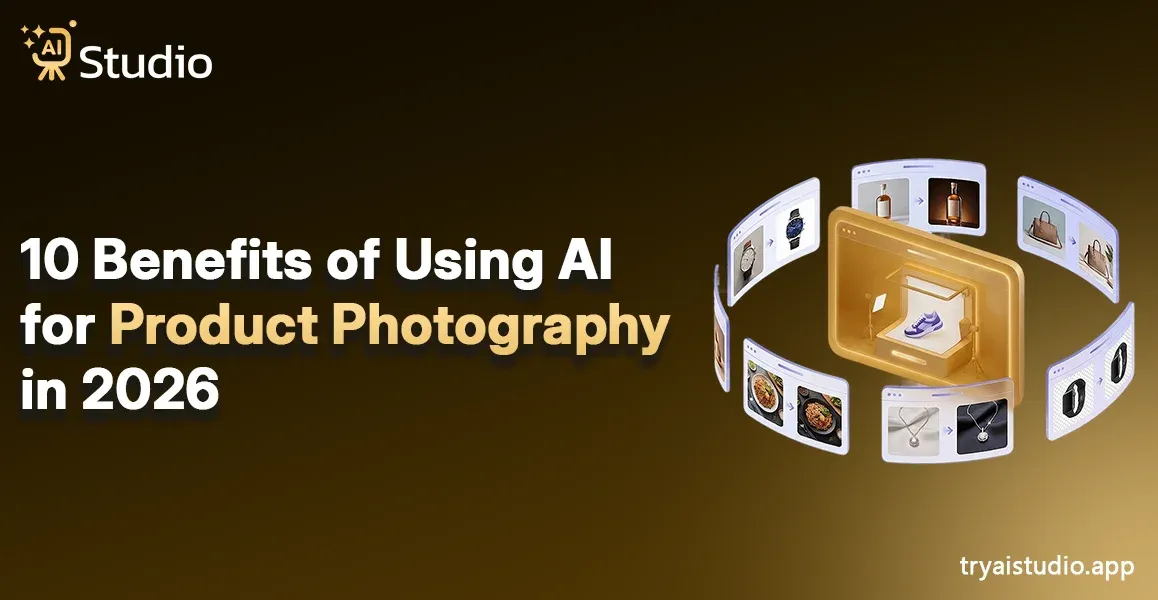
The last time you shopped online needs your complete focus. Your product choice was determined by which element you interacted with. The product image probably attracted your attention.
The benefits of AI product photography displayed a clean professional appearance which enabled viewers to almost touch the product. Excellent product photography functions as the main element which drives online sales but businesses require substantial investments to obtain such visual content.
The situation now undergoes rapid transformation. Businesses will use AI product photography as their primary visual development method after 2026 because it has become a standard operational tool.
The advantages of AI product photography systems apply to all business sizes from single-person Etsy stores to extensive e-commerce operations. This article will present an overview of AI product photography including its operational mechanism and all its benefits which will emerge during 2026.
Why Good Visuals Matter in 2026
In 2026, the average online shopper sees hundreds of product listings every week. Studies show that 93% of buying decisions are influenced by visuals. If your product image looks dull, blurry, or cheap, the shopper moves on usually within two seconds.
Great photos of products demonstrate their appearance through several features which establish trust between customers while creating product desire and performing the same functions of a salesperson who works in a store. The AI product photography becomes essential for shoppers who lose the ability to touch or test a product which they want to buy.
What is Traditional Product Photography?
Traditional product photography applies directly to its name because it involves taking pictures of products which will be used for selling purposes. Products become appealing to consumers through product photography which transforms basic items into desirable merchandise through its application of product photography.
Great photos of products demonstrate their appearance through several features which establish trust between customers while creating product desire and performing the same functions of a salesperson who works in a store.
What is AI Product Photography?
Simple Explanation
AI product photography refers to using artificial intelligence tools to create, enhance, or edit product images without a traditional photo shoot. You only need to upload a basic image of your product or describe it to the AI system which handles all aspects of your request — instead of booking a photographer, building a lighting system, and paying for a studio space.
The outcome produces professional product images which maintain high quality while reducing production time and expenses. Certain tools possess the capability to create complete visual representations based on single text descriptions.
How It Works
Most AI product photography platforms work in a few simple steps:
- You upload a basic photo of your product (even a smartphone snapshot works).
- The AI analyzes the image and removes the background automatically.
- You choose from various backgrounds, lighting styles, and settings.
- The AI renders a final, polished image that looks like it came from a professional studio.
Tools like Pebblely, Flair AI, Photoroom, and Adobe Firefly are already doing exactly this. They use deep learning models trained on millions of product images to understand how light, shadow, and composition should work for any given product.
Key Differences Between AI vs Traditional Photography
| Traditional Photography | AI Photography | |
|---|---|---|
| Cost per session | $500 – $3,000+ | $20 – $100/month |
| Time to deliver | Days to weeks | Minutes |
| Equipment needed | Camera, lights, studio | Just a smartphone |
| Skill required | Professional photographer | Anyone can do it |
| Scalability | Limited | Unlimited |
| Creative flexibility | Limited to studio setup | Unlimited backgrounds & styles |
| Consistency | Varies per session | Always consistent |
What are the Benefits of AI Product Photography
1. Cost Savings with AI Photography
How AI Reduces Photoshoot Expenses
The expenses of traditional product photography extend beyond the cost of hiring a photographer. The costs include studio space, lighting devices, decorative items, time needed for editing, and in some cases, actors and fashion experts. The expenses for a one-day product shoot dedicated to a small catalog exceed the range of $500 to $3,000.
The implementation of AI tools results in the complete elimination of multiple expenses. The majority of AI photography platforms require users to pay a fixed monthly subscription fee which typically ranges from $20 to $100 and allows them to create an endless amount of images.
One of the clearest benefits of AI product photography for small businesses is that it essentially levels the playing field. A boutique clothing seller can now produce images that look just as polished as a major fashion brand.
2. Faster Image Creation
Generate Product Images in Minutes
Speed is one of the most underrated advantages of AI product photography. With a traditional shoot, you schedule the session, wait for delivery of the raw files, go through a round of editing, and then wait again for the final approved images. That process can take days or even weeks.
With AI, you can upload your product photo and have a polished, background-swapped, studio-quality image in under five minutes. Some tools deliver results in under 30 seconds. When you are trying to launch a new product or update your listings for a sale, that kind of speed is a real competitive advantage.
Save Time vs Manual Shoots
The AI system benefits users by saving time — eliminating all need for communication between users and photographers, waiting periods for edited files, and the entire process of arranging meetings. The system allows you to control your creative process according to your personal schedule.
3. No Need for Studio or Equipment
A proper product photography studio needs a total of six essential equipment items — a high-quality camera, three different types of light sources, diffusing equipment, backdrops, and a dedicated operational area. The basic home setup requires an investment of several hundred dollars and demands time for users to become proficient.
The process becomes simpler because AI technology performs all necessary tasks. The user needs only a smartphone, a bright area, and AI software access. The software handles background changes, light modifications, shadow elimination, and produces the finished professional photograph.
Create Images from Anywhere
The solution benefits home-based sellers who operate pop-up shops and need to handle inventory from multiple sites. You can take a picture of your item on a dining table and create an attractive professional image within minutes.
4. Easy to Use for Beginners
No Photography Skills Needed
The benefits of AI product photography for small businesses are designed for use by people who lack advanced knowledge of photography. Users can operate the interface through simple actions — dragging, dropping, clicking, and downloading. Users can achieve excellent outcomes without needing to understand photography, design, or editing skills.
Simple Tools and Platforms
Platforms like Photoroom, Pebblely, and Remove.bg have been designed with simplicity in mind. Many platforms provide users with one-click background removal, pre-built templates, and style presets which enable first-time users to create high-quality product images from their very first attempt.
5. Unlimited Creative Possibilities
Different Backgrounds and Styles
With conventional photography methods, your artistic possibilities are restricted to the equipment you can assemble in a studio. AI tools let you experiment with dozens of different backgrounds, seasons, color palettes, lighting moods, and visual styles — all in one session. You can test how your product looks in a cozy kitchen setting, a minimalist white studio, or an outdoor garden, and pick whichever works best for your audience.
Unique Marketing Visuals
This creative flexibility allows you to create customized product images which match specific campaigns, seasonal requirements, and platform needs. The Valentine's Day campaign can use warm red backgrounds while the summer sale displays bright sunny outdoor scenes. The advantages of using AI for product images become most apparent through its creative options.
6. Consistent Image Quality
Same Style Across Products
The main difficulty in traditional photography is maintaining uniformity across images. Minor alterations in lighting angles and editing make your store look unprofessional.
AI tools solve this completely. You can create a standard design — including background style, lighting, and composition — and apply it across your entire catalog, whether it contains 10 items or 10,000 items. Every image will follow the same visual language.
Strong Brand Identity
Visual consistency establishes the foundation for effective brand identity. The consistent visual elements of your store and social media feed create a trustworthy experience which helps customers recognize your brand — a crucial element in online retailing.
7. Quick Editing and Updates
Instant Changes
Traditional photography requires complete rescheduling of a shoot when photographers want to make changes after completing their work. The task of changing backgrounds for 50 product images requires extensive retouching work which can take multiple days.
AI enables users to perform modifications at almost instantaneous speed. Want to test a different background? A few clicks. Shadow adjustment? A few seconds.
Easy Updates Anytime
The current system allows businesses to update their visual content without interrupting their operational processes — enabling fast-paced businesses to develop new products while maintaining operational efficiency.
8. Perfect for E-commerce Growth
Better Product Listings
On platforms like Amazon, Etsy, Shopify, and WooCommerce, your product image is often the very first thing a potential buyer sees. AI-generated images can be tailored to meet the exact specifications of each platform — whether that requires a white background for Amazon, a lifestyle shot for Instagram, or a flat lay for Pinterest.
Improved Conversions
Research studies show that improved product images result in increased customer conversion rates. Shoppers demonstrate higher purchase rates when they can view products through proper lighting, appropriate viewing angles, and with no background distractions.
Use in Ads and Social Media
AI-generated product images work just as well in paid advertising and social media content. Platform-specific variations can be created through Instagram square crop, Google Ads banner format, and Pinterest portrait version — all from one session.
9. Scalability for Large Product Catalogs
Manage Hundreds of Products
The requirement for high-quality images for 500 products creates an impossible challenge because traditional photography needs weeks of work and a large professional team. AI tools handle large volumes with ease — upload 100 product images, choose a specific style, and the AI will automatically process all of them within hours.
Best for Growing Businesses
The AI product photography solution provides small businesses with the ability to create visual content for their expanding needs. Your visual production capabilities will grow with your catalog expansion while maintaining your current budget and time requirements.
10. Levels the Playing Field for Small Businesses
Small businesses and independent sellers have always faced a disadvantage when competing with large brands that have dedicated photography budgets. AI product photography removes that barrier entirely.
A solo entrepreneur running a handmade jewelry shop can now produce the same quality of product imagery as a national retail chain — without hiring a team, renting a studio, or learning advanced editing software.
Conclusion
The benefits of AI product photography have developed into a business solution that enables companies to operate more efficiently while maintaining their competitive edge in 2026. The system provides the ability to create high-quality visuals by eliminating all traditional obstacles which previously made this process expensive and time-consuming.
AI technology lets businesses manage their product launches and expand product lines at the speed which contemporary markets require. The benefits of AI product photography enable small businesses to produce professional-quality images without needing to spend large amounts of money or acquire specialized skills.